Grandparents want the small stuff. Not “we’re all fine”, but what the kids had for tea, the wobbly tooth, the row about wellies. Write a letter full of that, ask a question or two so they have a reason to write back, and send it in a way they can open without learning anything new.
Here’s what to put in a letter from a child or a grown-up grandchild, what to ask, what grandparents can send the other way, and how to get it to a gran who won’t do apps.
What they want to hear (the small stuff)
The news you think is too dull to write down is exactly what they’re hoping for. They can’t see your week, so describe it.
- What everyone’s eating. The new cereal, the vegetable that’s been banned, the cake that sank.
- What’s changed. A tooth out, a new bike, a haircut that needs explaining.
- What’s the same. The dog still steals socks. They’ll find that oddly reassuring.
- Something of theirs. The blanket they knitted is on the sofa. The recipe they gave you got made.
Max has lost his first tooth. He put it under his pillow, then got worried and left a note asking the fairy to give it back afterwards.
Your blanket is on the sofa, and the cat has decided it belongs to her now. We haven’t argued.
Questions to ask them
A question gives them a reason to reply, and grandparents have the stories. Ask about them, not just their knees.
- What did you spend your first wages on? Expect a story about a coat, or a motorbike.
- What did you get up to at my age? The child can ask this one themselves.
- What was Mum like when she was little? This always gets the longest answer, and Mum may not enjoy it.
- What’s in the garden this week? Easy to answer, and they’ll be pleased you asked.
Letters written by young kids (let them dictate)
Under about seven, children are much better at talking than writing. Sit them down, ask “what do you want to tell Nana?”, and write down exactly what comes out, tangents included. Don’t tidy it. The bit about the worm is the bit she’ll read to her friends at lunch.
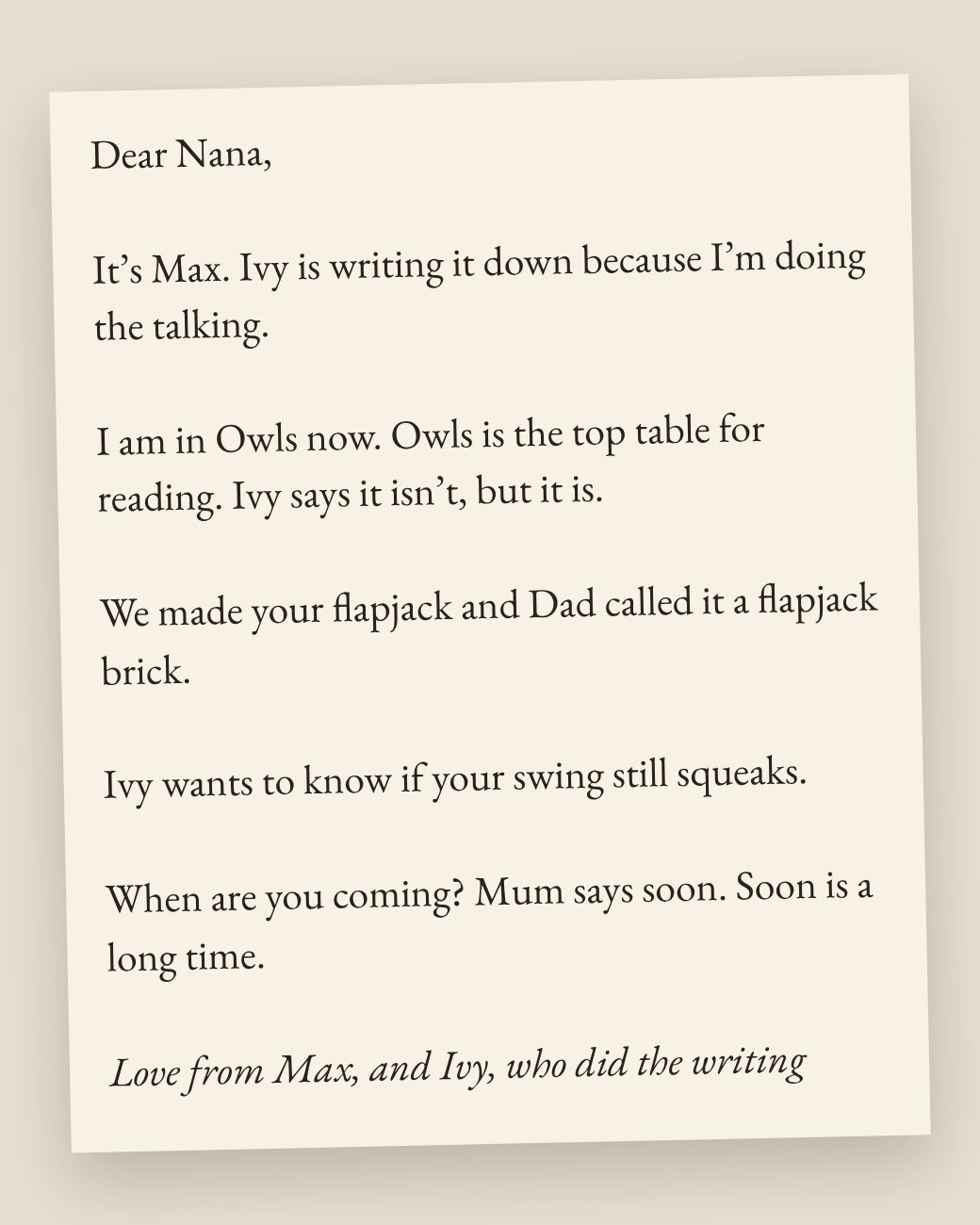
Older ones can write a line or two themselves. Siblings can share the job: one talks, one writes, and the argument about who goes first can stay in. Here’s Max, with Ivy on pen:
Dear Nana, it’s Max. Ivy is writing it down because I’m doing the talking. I am in Owls now. Owls is the top table for reading. Ivy says it isn’t, but it is. We made your flapjack and Dad called it a flapjack brick. Ivy wants to know if your swing still squeaks. When are you coming? Mum says soon. Soon is a long time. Love from Max, and Ivy, who did the writing
From a grown-up grandchild
Once you’ve left home, you’re the one with news they can’t see. Write about your life as it is, the job, the flat, the person you’re seeing, and leave out the polish. They’d rather hear the boiler broke than that everything’s great.
Dear Grandad, I’ve finally learnt to make your gravy. It took four goes and one smoke alarm. Tell me what I’m still doing wrong.
Dear Gran, work is busy, the flat is cold and I’m very happy. I wanted you to hear that last bit from me.
Then thank them for one thing from when you were small: the lifts to swimming, the Saturday chips, the den in the back bedroom. They won’t have known it stuck.
Writing back the other way
For grandparents writing to a grandchild: keep it short for little ones, and end with a question so a parent can help them answer. Reply to what they told you, specifically, so they know you read every word.
Dear Ivy, thank you for the drawing of my house. You gave it a tower, which it hasn’t got, though I’ve always wanted one.
Dear Max, the swing still squeaks. Grandad says he’ll oil it, and he’s been saying that since your mum was six. Which table are you on for sums?
Sending it to someone who doesn’t do apps
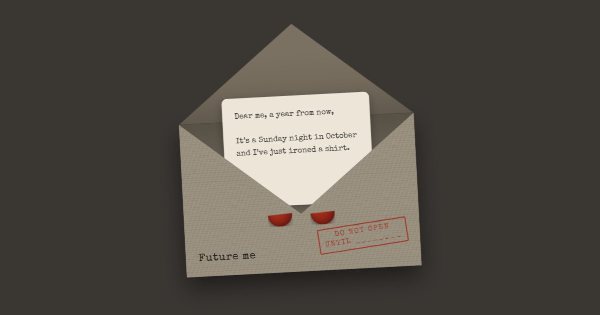
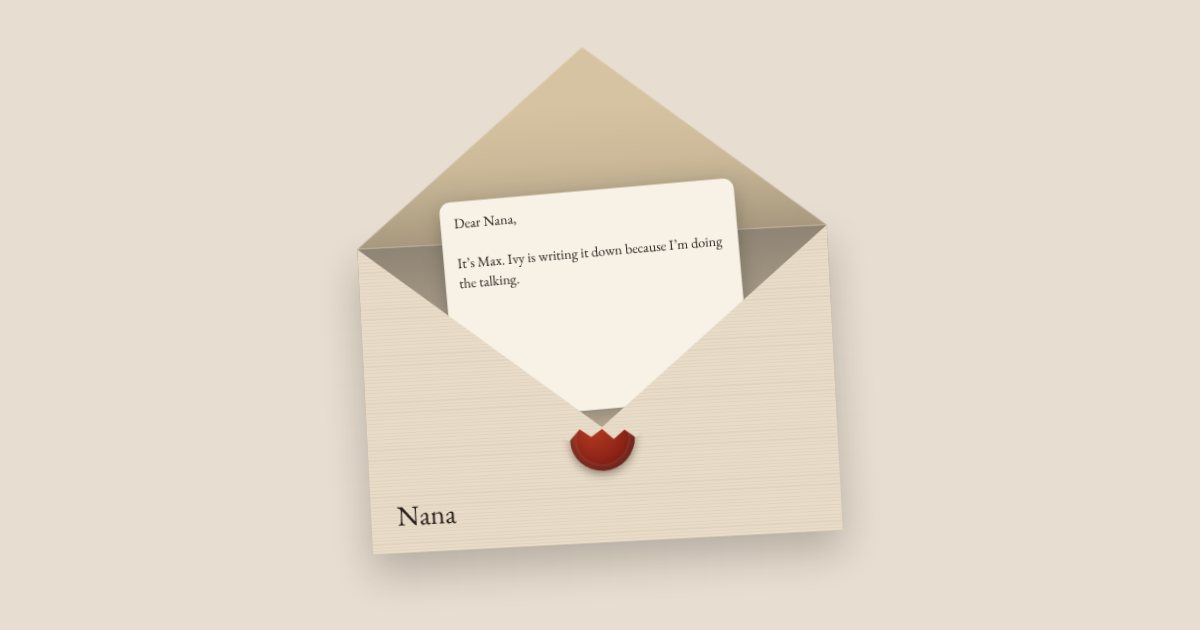
Plenty of grandparents have a phone or a tablet and no wish to download anything onto it. They don’t need to. A Stampgoose envelope arrives as a link, by text or email, and opens in the browser they already use. There’s no app and no account, and nothing to type unless you’ve added a passphrase. Her name is on the front; she taps the seal, the flap lifts, and the letter comes out.
Put a photo of the drawing on a postcard beside the letter, and add a video: the two of them saying hello, or Max showing off the gap where the tooth was. That’s the piece she’ll play to the neighbours. Letters and photos are kept for good, so she can go back to them; an uploaded video is kept for a year after the envelope is first opened, and she can save a copy before then. She can write back from the envelope itself; the reply is already addressed to you. If it’s for Christmas or her birthday, seal it until that morning, and she’ll see a countdown until then. For the card itself, the guide on what to write in a Christmas card has lines to start from.
If she’s nervous about links, ring her while she opens the first one. After that, she’ll be waiting for the next.
The grandparent page is for letters going the other way, with old photos; video messages are how the kids’ hello gets there, and digital postcards carry the drawings.
Questions people ask
What do you write in a letter to your grandma?
The small news of your week, one thing that made you think of her, and a question she’ll enjoy answering. End with when you’ll next see or speak to her.
How can I help my child write to their grandparents?
Let them talk while you write it down, word for word. A couple of prompts help: what was the best bit of the week, and what do you want to ask Nana? Add a drawing or a photo.
How do I send a letter to a grandparent who isn’t good with phones?
Send it as a link that opens in the browser, with nothing to install and no account to make. Ring them while they open the first one; after that, they’ll know what to do.