An apology letter is useful precisely because it isn’t a conversation. You get to find the right words without being interrupted, and they get to read it without having to react on the spot. But a written apology can also go wrong in a way a spoken one can’t: they can read it twice, and notice every “but”. Here’s how to write one that holds up.
Before you write
- Wait until you’re calm. An apology written while you’re still defending yourself will sound like it.
- Be clear about what you’re sorry for. Write it down in one sentence, for yourself, first.
- Remember who it’s for. An apology is for them, not to make you feel better. If you’re writing it to be forgiven, it’ll show.
1. Say what you did
Name it plainly. Vague apologies (“I’m sorry for everything”, “I’m sorry if I upset you”) make the other person do the work of explaining what went wrong, and they tend to read as not really knowing.
I’m sorry I didn’t come to your mum’s birthday, and that I told you on the morning.
I’m sorry for what I said about your job at dinner on Saturday. It was unkind and it wasn’t true.
Avoid “if”: “I’m sorry if you were hurt” turns the apology into a question about whether they should have been.
2. Show you understand how it landed
This is the part most apologies skip, and the part that matters most. Show that you’ve thought about it from their side.
You’d been looking forward to it for weeks, and I made you explain my absence to everyone. That’s embarrassing and it’s lonely, and I put you there.
3. Leave out the “but”
Everything before a “but” gets cancelled by it. You might have had reasons, and they might even be good ones, but they belong in a different conversation, later, if they ask.
Not this: I’m sorry I snapped, but I’d had a terrible day.
This: I’m sorry I snapped. You didn’t deserve it, whatever sort of day I’d had.
4. Say what will change
An apology without a change is a promise to do it again. Make it concrete, and make it something you’ll really do.
I’ve put your mum’s birthday in my calendar for next year, and I’ve asked her if I can take her for lunch before then, just the two of us.
5. Don’t ask for anything
Don’t ask for forgiveness, a reply, or a conversation by a certain time. They’ll come to you when they’re ready, if they do. You can say you’d like to talk, and leave it there.
You don’t need to reply. I just wanted you to have this in writing. I’m here when you want to talk.
Example apology letters
To a partner
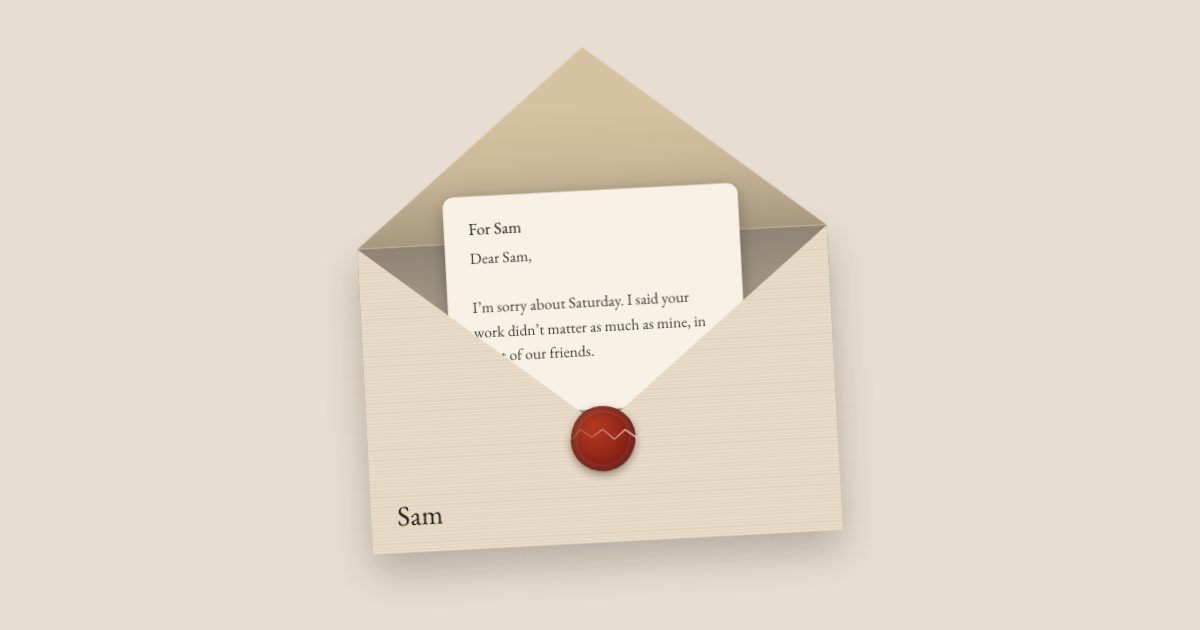
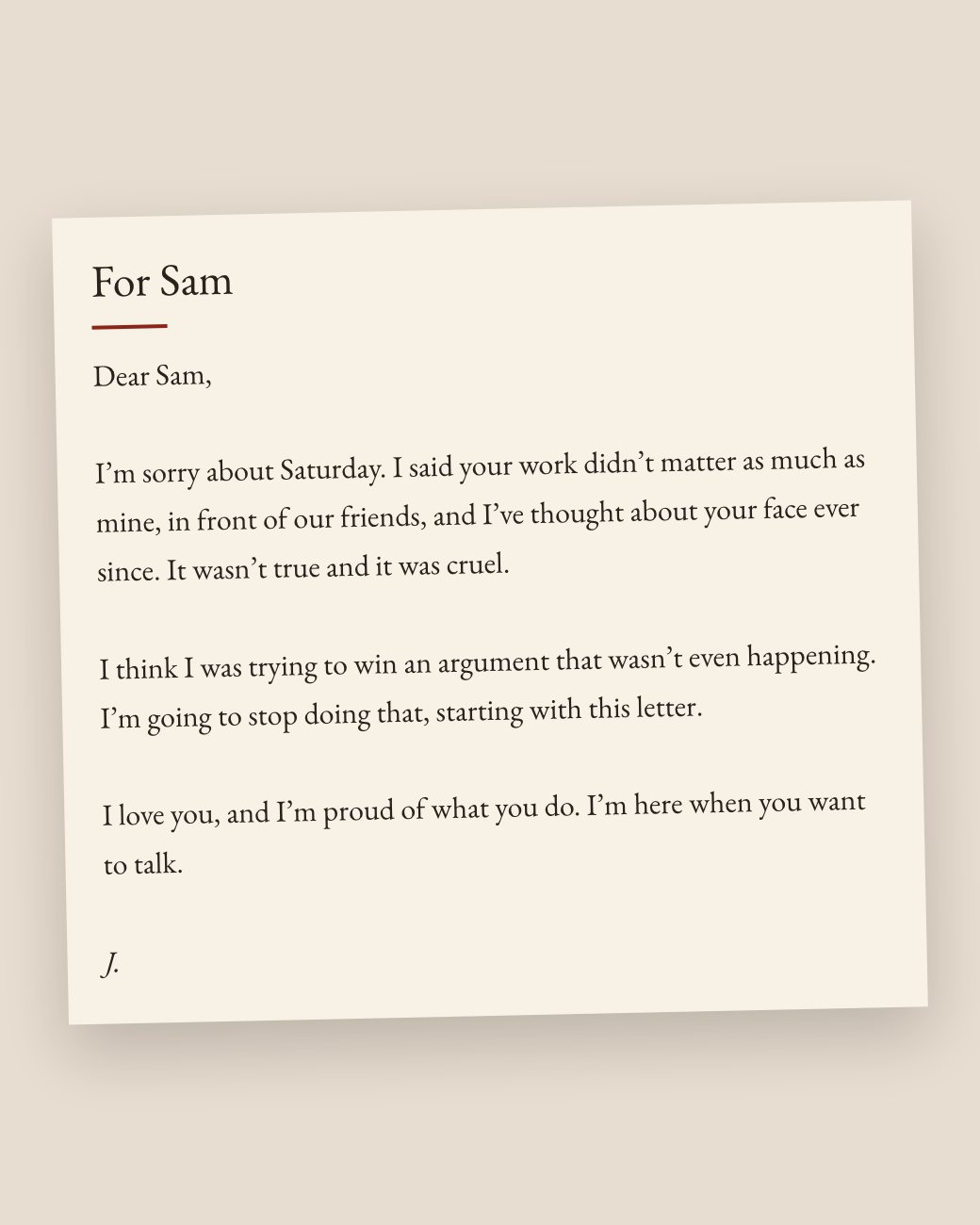
Dear Sam, I’m sorry about Saturday. I said your work didn’t matter as much as mine, in front of our friends, and I’ve thought about your face ever since. It wasn’t true and it was cruel. I think I was trying to win an argument that wasn’t even happening. I’m going to stop doing that, starting with this letter. I love you, and I’m proud of what you do. I’m here when you want to talk. J.
To a friend
Dear Priya, I’m sorry I went quiet when you needed me this spring. You told me things were hard and I sent a heart emoji and disappeared. I was overwhelmed with my own stuff, which I know isn’t an excuse; you’d have made time for me. I miss you. I’d love to buy you a coffee and listen properly, whenever you’re ready, and no hard feelings if you’re not.
To family
Dear Dad, I’m sorry I missed your birthday dinner. I know you’d booked the table months ago and I let you down at the last minute. I’ve got no good reason and I’m not going to invent one. Can I take you for lunch on Sunday? My treat, your choice of pub. Love, Tom.
Letter first, or in person?
Both, usually. The letter lets you get it right and gives them room to take it in on their own terms, which is often kinder than an apology they didn’t choose the moment for. Then follow it up in person, when they’re ready.
If you send it digitally, send it as a letter rather than a text: something with a beginning and an end, that they can open when they choose and reread later. A photo from before it went wrong can help, if it’s the right one, and a short video can help some things land. Keep it plain, and don’t perform it. In an envelope, it only opens when they tap it.
The sorry envelope is the quiet one, with no offers on the page and nothing asked of them; the digital letter page explains how a letter sent as a link opens and stays.