A sympathy card isn’t a test of writing. The person reading it won’t remember your phrasing. They’ll remember that you wrote, that you said their person’s name, and whether you said something true about them. Three or four sentences is enough, and plain beats polished every time.
Start simply
You don’t need a clever opening. Say you’re sorry, and use the name of the person who died if you knew it. Names matter: people who are grieving often say the hardest part is how quickly everyone stops saying it.
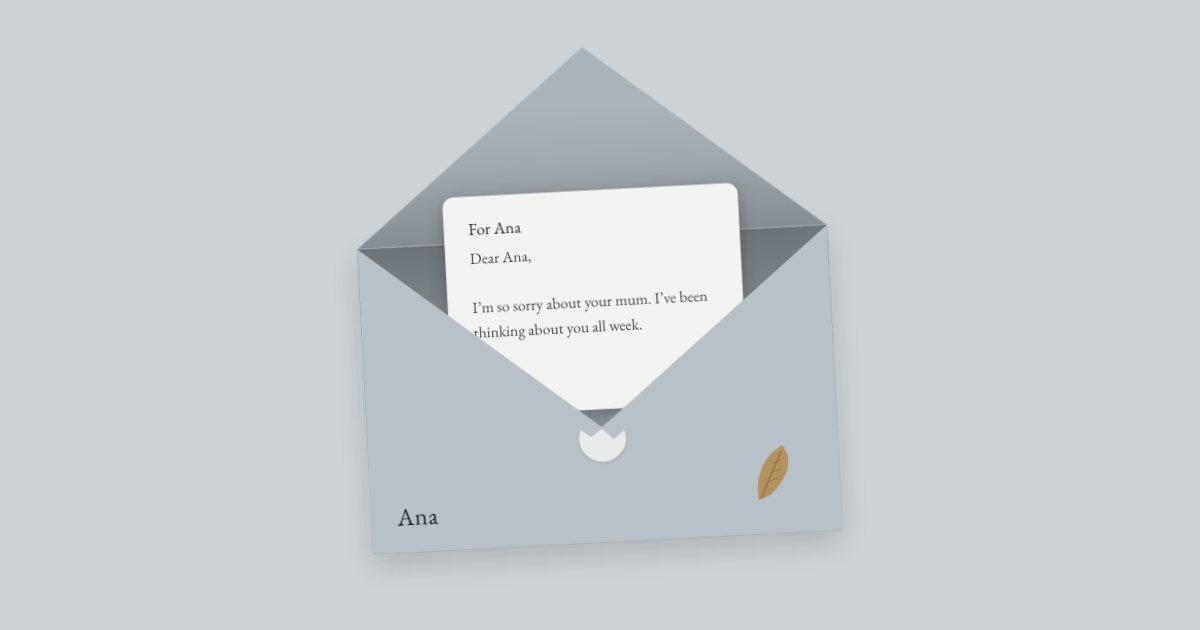
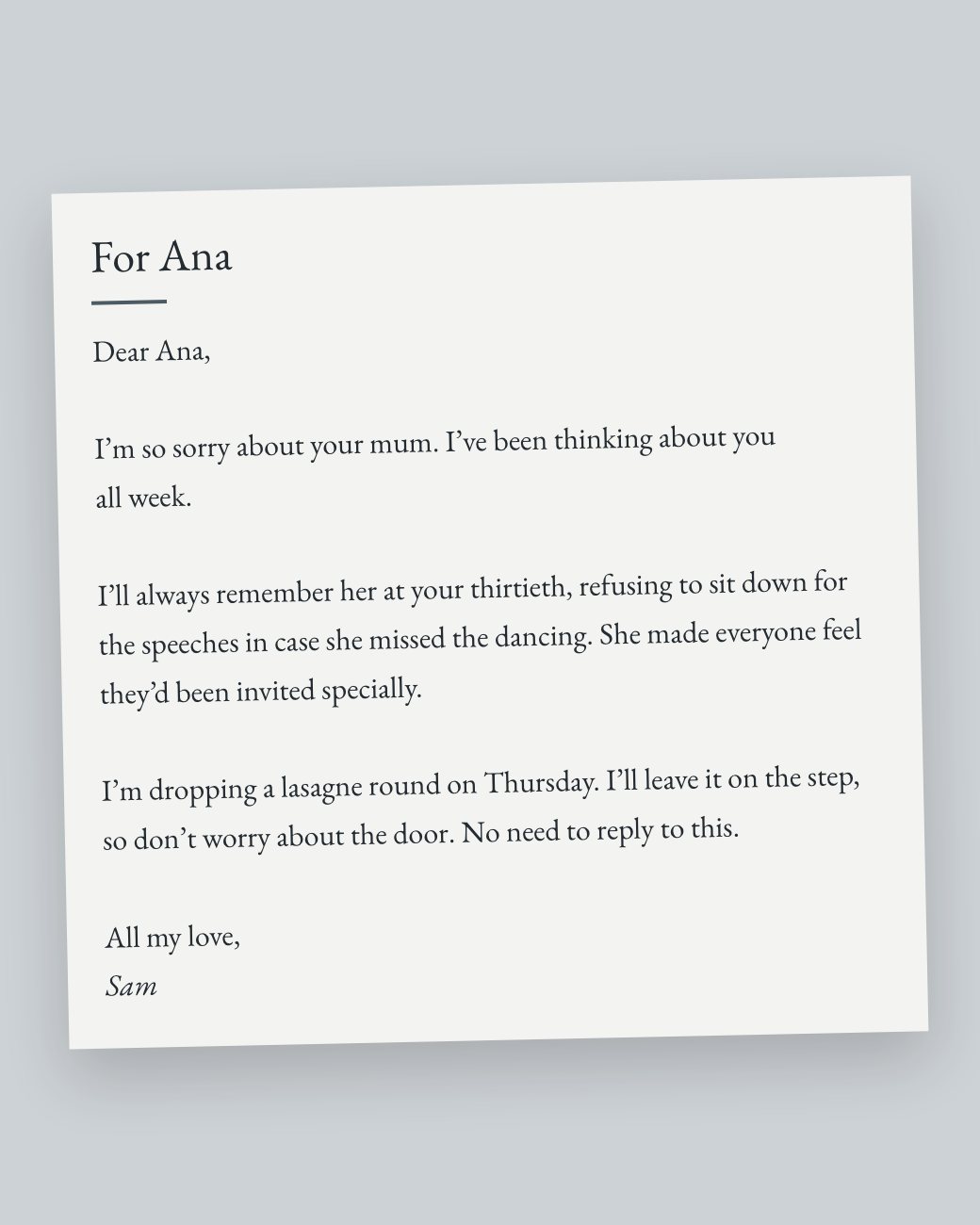
I’m so sorry about your mum.
I was so sad to hear about Dan. I’ve been thinking about you all week.
There’s nothing I can say that makes this easier, but I wanted you to know I’m thinking of you.
“Passed away”, “died” and “lost” are all fine. Use whichever the family uses, if you’ve heard them talk about it.
Say something you remember
This is the part people keep. A specific memory, however small, tells them their person was seen by someone else, and it’s often something they didn’t know. Funny is allowed, if it’s the kind of funny they’d have laughed at.
I’ll always remember your dad at the allotment, handing out courgettes nobody had asked for.
She was the first person to make me feel welcome at work. I don’t think she ever knew how much that mattered.
Every time I hear that awful song from the wedding, I’ll think of him on the dance floor.
If you didn’t know them, write about the person you’re sending it to instead:
I never met your grandmother, but I know how much she meant to you from the way you talked about her.
Offer something specific
“Let me know if you need anything” is kind, and it’s almost never taken up, because it asks a grieving person to organise their own help. Offer one real thing, with a day attached, and make it easy to say no.
I’m dropping a lasagne round on Thursday. I’ll leave it on the step, so don’t worry about the door.
I’m free every Sunday this month if you’d like a walk. No need to decide now.
No need to reply to this. I’ll ring next week, and it’s fine if you don’t pick up.
How to end it
Match the sign-off to how well you know them.
- Close family and friends: All my love · With love, always · Thinking of you, and here whenever you need me
- Friends and colleagues: Thinking of you · With love · Sending you all my best
- People you know less well: With deepest sympathy · With sincere condolences · Thinking of you and your family
What to leave out
Most of the things that land badly are said to fill a silence. In a card there’s no silence to fill, so you can leave them out.
- “Everything happens for a reason” and “They’re in a better place”, unless you know those are their beliefs.
- “I know how you feel.” Even if you’ve lost someone too, every loss is its own.
- “At least…” At least it was quick, at least they had a long life. The sentence rarely comforts anyone.
- Your own story at length. A line about your own loss can help; a paragraph turns the card towards you.
- Questions about how it happened. They’ll tell you if they want to.
Short messages, for when you didn’t know them well
For a colleague, a neighbour or a client, a short card is right. These are all complete on their own.
I was so sorry to hear about your father. Thinking of you and your family.
Everyone here is thinking of you. Take all the time you need; we’ve got things covered.
I’m so sorry for your loss. I hope you’re surrounded by people who love you this week.
With deepest sympathy, and warm memories of a lovely man.
When someone has lost a pet
People are often embarrassed by how hard it hits, so take it seriously and use the animal’s name.
I’m so sorry about Pepper. Fourteen years of her on the sofa is a lot to miss. She had a very good life with you.
When it’s late
It’s never too late. The cards stop after a few weeks, and the grief doesn’t, so a letter months later, or on the anniversary, or on their birthday, often means more than the first one would have.
I know it’s been a few months, and I’ve thought of you so often. I wanted to say how much I miss her too.
When you’re far away
If you can’t be at the funeral, say so simply, and say what you’d have liked to do.
I’m so sorry I can’t be there on Friday. I’ll be thinking of you all at eleven, and I’ll raise a glass of his terrible sherry.
A letter can also carry things a card can’t: a longer memory, or a photo of their person they might never have seen. If you have one, send it. Families treasure the pictures other people took. A video is rarely right for a sympathy message, but a minute of you saying what you’d have said at the door can mean a great deal to someone far away. Only send one if you’re sure it’ll be welcome.
The sympathy envelope is the quiet one: no offers on the page, nothing asked of them, and a postcard for the photo they might not have seen. The thinking of you page is for the weeks after.